Iron (Fe) Measurement
Iron (Fe) is the first element in group 8 of the periodic table, the most widely used and the cheapest metal. It has an atomic number of 26, an atomic weight of 55.85, and common valencies of 2 and 3 (and sometimes valences of 1, 4, and 6). Iron occurs in the minerals hematite, magnetite, taconite, and pyrite. It is widely used in steel and other alloys.
Solubility of Iron in Water
The solubility of the iron ion (+Fe2) is controlled by the carbonate concentration. Since groundwater is often anoxic, any iron dissolved in groundwater is usually in the ferrous state. Upon exposure to air or the addition of an oxidant, it is oxidized to the Fe3+ state and may hydrolyze to form the insoluble red hydrated iron oxide. In the absence of complexing ions, Fe3+ is not significantly soluble unless the pH is very low.
Characteristics of Iron (Fe)
Pure iron is chemically very reactive and corrodes rapidly, especially in humid air or at high temperatures. It has four allotropic forms or ferrites, with transition points at 700, 928 and 1530 °C, known as alpha, beta, gamma and omega. The alpha form is magnetic, but when it is converted to the beta form, the magnetism disappears although the lattice remains unchanged. Alloy pig iron contains about 3% carbon with varying amounts of sulfur, silicon, manganese and phosphorus. Iron is hard, brittle, relatively fusible and is used to produce other alloys including steel.
What problems does the presence of iron in water cause?
- If its level is high, it causes turbidity, taste and color in the water.
- It causes deposits in water supply channels.
- In the paper, leather and ice industries, it reduces efficiency.
- It leaves brown stains on kitchen utensils and clothing.
- It causes scale in cooling systems.
How does iron cause corrosion?
Iron and iron alloys rust due to a chemical reaction called oxidation, which involves the loss of electrons. Oxidation occurs when iron is exposed to moisture or oxygen. During this chemical reaction, iron is converted to reddish-brown hydrated iron oxide. (Both oxygen and moisture are catalysts for rusting.) Boiler corrosionusually occurs when the alkalinity of the boiler water is low or when the metal is exposed to oxygen-carrying water during operation or periods of inactivity. High temperatures and stresses in the boiler metal accelerate the corrosive mechanisms.
How to prevent iron corrosion in installations?
Corrosion inhibitors are chemicals that react with the metal surface or surrounding gases to prevent electrochemical corrosion reactions. They prevent corrosion by applying a protective layer to the metal surface.
Determination of iron (Fe):
Divalent iron ions react with orthophenone and form a pink complex ion, the intensity of the color formed depends on the concentration of divalent iron in the test sample. If trivalent iron ions are also present, they are reduced by hydroxylamine and converted to divalent iron.
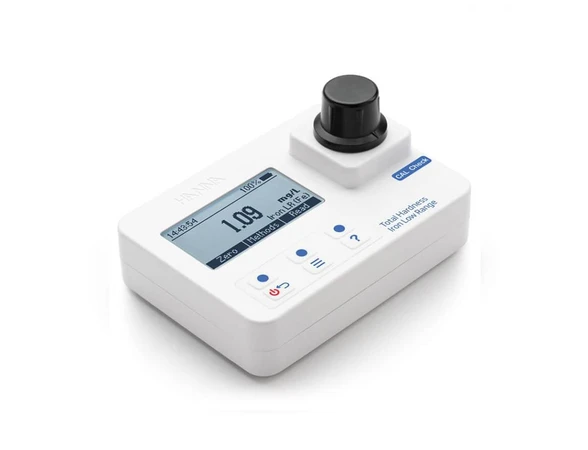
The intensity of the colored species is measured using a spectrophotometer. A calibration curve (absorption versus concentration) for iron is prepared and the concentration of the unknown iron sample is determined.
*The laboratories of Abrizan Industrial Research Company, located in Fars Science and Technology Park, are capable of measuring various water parameters, including iron (Fe), with experienced staff and the use of advanced devices and equipment.