


pH measurement and its methods

What is a pH meter?
The pH of water determines the concentration of hydrogen ions and its acidity or alkalinity. Pure water is very slightly decomposed into H and OH ions. The pH of drinking water should usually be around 7 (neutral). If the pH is less than 7, the water is acidic, and if the pH is above 7, the water becomes alkaline. The lower the pH of water is from the neutral pH of water, the greater the solubility of iron in water, so in various industries, the pH of water is adjusted above neutral to prevent corrosion. The pH meter and its methods are used to accurately measure the pH of water.
The rate of water corrosion due to the acidity of water increases with increasing temperature, so it is absolutely necessary to keep the pH of water high at high temperatures.
The pH of contaminated water basically shows the relationship between free carbon dioxide and the amount of bicarbonate and carbonate. Natural waters usually have a pH between 4 and 9. Most of them are slightly alkaline due to the dissolution of alkaline carbonates and bicarbonates of the earth's crust.
Different methods of measuring pH or pH meter:
There are two general methods for pH meter or measuring the pH level in water, which include the following two methods.
Method of using an electrical pH meter:
- Colorimetric pH meter
- Electrical pH meter
Most pH measurements in the laboratory using a pH meter work by means of an electrical circuit. This circuit consists of a glass electrode and an external reference electrode and a voltmeter that records the electrical potential in the circuit. The glass electrode consists of a current-carrying wire that is immersed in a solution that has a known pH.
Calibrating the pH meter:
Before using the pH meter, the device must be calibrated. Buffer solutions with known pHs are suitable for this task.
We turn on the pH meter, wash the electrode with distilled water. Shake it until it dries. Then we place it in a beaker containing a buffer solution with pH 7 and wait for the number on the screen to stabilize.
We wash the electrode with distilled water and shake it well to remove the water. Then we place it in a buffer solution with pH 4 to stabilize the pH meter.
We control the calibration of the device by measuring at a standard pH of 7. To do this, the electrode must be placed in the solution. The pH meter is ready at this stage
At this stage, we pour a sufficient amount of the sample into the 100 ml beaker and immerse the electrode in it and let the device stabilize for about 2 minutes. When the number on the device is stable, we read the pH value of the desired sample from the screen.
Tips on how to maintain the pH electrode:
An important point about using the pH electrode is to avoid placing this electrode in solutions that react with silver.
If you place the pH electrode in distilled water for a long time, because the electrode contains KCl and distilled water does not contain it, the KCl in the electrode gradually enters the distilled water and of course disrupts the operation of the electrode.
Cleaning the glass membrane of the pH electrode
If the electrode does not accurately indicate the pH of these buffers, one of the reasons could be that the glass membrane of the electrode is contaminated.
To clean the glass membrane of the electrode, place its tip in a 0.1 M hydrochloric acid solution for 15 seconds and then rinse with distilled water. Then place it in a 0.1 M sodium hydroxide solution for 15 seconds and rinse with distilled water after 15 seconds. Repeat these actions several times.
Now check the pH of the buffers again. If the problem is still not resolved, place the electrode tip in a 20% ammonium bifluoride solution for 30 seconds or in a 10% hydrofluoric acid solution for 15 seconds. Then rinse with distilled water. In the next step, place the electrode tip in concentrated hydrochloric acid for 30 seconds. (This is to remove any possible fluoride residue from the glass membrane) Then rinse well with distilled water.
Place the electrode in a buffer with pH= 4 for one hour. Then test the electrode performance. If the problem is not resolved, you may need to replace the electrode.
Colorimetric pH Meter
This chemical method used to determine pH is to add a drop of an acid-base indicator to the sample. pH indicator papers are suitable for this purpose. A drop of the sample is placed on pH paper. And in this way the desired color is observed. Indicators are large organic molecules that change color based on the pH of the solution. A color change is observed within a range of the pH range for each indicator. (Usually about 1.5 pH units). Intermediate pHs are observed in the middle of the table. Based on this pH value, intermediate colors are also located in this pH range.
For example, the red Cresol indicator at a pH below 7, the color of the indicator solution is yellow, and at a pH above 8.8, the color of the solution is red. At intermediate pH values, the color change of the solution will be orange, depending on the type of pH.
There are many different indicators that can cover the entire pH range.
*The laboratories of Abrizan Industrial Research Company located in Fars Science and Technology Park are capable of measuring a variety of water parameters, including pH, using advanced devices and equipment.
share :
Related Articles
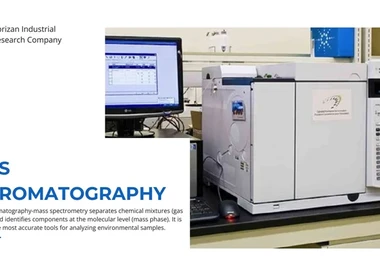
Gas chromatography/mass spectrometry (GC/MS)
Gas chromatography-mass spectrometry separates chemical mixtures (gas phase) and identifies components at the molecular level (mass phase). It is one of the most accurate tools for analyzing environmental samples.

Flame Photometer
Flame photometry is used to determine the concentration of alkaline earth and alkaline elements (in inorganic chemical analysis to determine the concentration of certain metal ions including sodium, potassium, lithium, and calcium) in aqueous solutions.
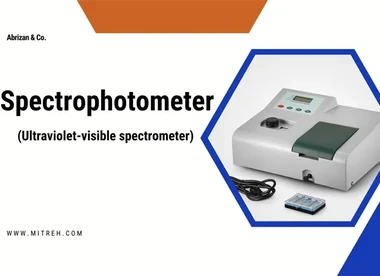
UV-Vis or ultraviolet-visible spectrometer (spectrophotometer)
A spectrophotometer, or visible and ultraviolet spectrometer, sometimes called UV, is a device for measuring the amount of a substance based on the amount of electromagnetic absorption of that substance.

FTIR Infrared Spectrometer
Fourier transform infrared (FTIR) spectroscopy is a method that scientists use to determine the structure of molecules by absorbing characteristic infrared radiation. The infrared spectrum is the vibrational spectrum of a molecule. When exposed to infrared radiation, sample molecules selectively absorb radiation of specific wavelengths, which causes a change in the dipole moment of the sample molecules.

Autolab device
The Autolab is an ideal choice for those looking for a low-cost, compact, yet high-performance electrochemical analyzer. Fully integrated with NOVA software, this compact instrument can perform resistance measurements in the microhertz to megahertz frequency range.

High-performance liquid chromatography (HPLC)
HPLC analysis, or high-performance liquid chromatography, is suitable for analyzing and separating chemical and plant compounds and is used in various fields of chemistry, pharmacy, industrial chemistry, and clinical diagnostics.

Glass membranes
A silicate glass used for glass membranes consists of an infinite three-dimensional structure of four negatively charged SiO4 groups, in which each silicon is bonded to four oxygens and each oxygen to two silicons. Within the network of this structure there are enough cations to neutralize the negative charge of the silicate group. Singly charged cations such as sodium and lithium move in the network and are responsible for electrical conduction within the membrane.

Danger rhombus
The National Fire Protection Association (NFPA) has developed a standard called NFPA 704 that is used to identify hazards from materials (especially chemicals). Among occupational health and safety experts, this standard has become known as the Hazard Diamond. It seems that the Rescue Diamond might have been a more appropriate name for the Hazard Diamond!
Submit your opinion
Your email address will not be published.