
Corrosion comparison: Mitreh Cold scale remover solution (MDA0102) vs. hydrochloric acid
1404/08/24
What is the Langelier Index? A Complete Guide to Predicting Water Sedimentation and Corrosion
1404/08/21
Measuring Carbonate and Bicarbonate in Water: A Complete Guide to Alkalinity Control
1404/08/19
Warning signs that indicate the need for chemical cleaning of the heat exchanger
1404/08/17
Glass membranes

Introduction
A silicate glass used for glass membranes consists of an infinite three-dimensional structure of four negatively charged SiO4 groups in which each silicon is bonded to four oxygens and each oxygen to two silicons.
Within the network of this structure there are enough cations to neutralize the negative charge of the silicate group. Singly charged cations such as sodium and lithium move in the network and are responsible for the electrical conduction within the membrane.
Desiccation of glass membranes
The surface of glass membranes must be water-coated before it can function as a pH electrode. The amount of water involved is approximately 50 mg per cubic centimeter of glass. Desiccant glasses do not show any response to pH. Even desiccant glasses lose their pH sensitivity after dehydration by storage in a desiccator. However, this effect is reversible and the response can be restored by soaking the glass membranes in water.
The hydration of pH-sensitive glass membranes involves an ion exchange reaction between singly charged cations in the glass lattice and protons from the solution in which the electrode is immersed. The process involves only monovalent cations because divalent and trivalent cations are tightly held within the silicate structure and cannot exchange with ions in solution.
The equilibrium constant for this process is so large that the surface of hydrated glass membranes is usually composed entirely of silicic acid (H2O3). An exception to this is in strongly alkaline media where the hydrogen ion concentration is very low and the sodium ion concentration is very high. Here a significant fraction of the four negatively charged ShO4 sites are occupied by sodium ions.
Electrical Conduction Across Glass Membranes
For a glass membrane to function as a measuring electrode for cations, it must conduct electricity. Conduction across a water-filled membrane involves the movement of sodium and hydrogen ions. Sodium ions carry charge within the dry portion of the membrane, and protons are mobile in the gel layer. Conduction across the solution/gel interface occurs via the following reactions:
H + Gl↔ HGl
Glass1 Gass1 solution1
HGl↔ H + Gl
Glass2 solution2 Glass2
where subscript 1 refers to the interface between the glass and the analyte solution and subscript 2 refers to the interface between the internal solution and the glass. The positions of these two equilibria are determined by the concentrations of hydrogen ions in the solutions on both sides of the membrane. If these positions differ, the surface where more separation occurs will be more negative than the other surface. Thus, a boundary potential Eb is created across the membrane. The magnitude of the boundary potential depends on the ratio of the hydrogen ion concentrations of the two solutions. It is this potential difference that serves as the analytical parameter in potentiometric measurements of pH.
((Source: Fundamentals of Analytical Chemistry-Skoog-Westhaller))
share :
Corrosion comparison: Mitreh Cold scale remover solution (MDA0102) vs. hydrochloric acid
1404/08/24What is the Langelier Index? A Complete Guide to Predicting Water Sedimentation and Corrosion
1404/08/21Measuring Carbonate and Bicarbonate in Water: A Complete Guide to Alkalinity Control
1404/08/19Warning signs that indicate the need for chemical cleaning of the heat exchanger
1404/08/17
Related Articles

Gas chromatography/mass spectrometry (GC/MS)
Gas chromatography-mass spectrometry separates chemical mixtures (gas phase) and identifies components at the molecular level (mass phase). It is one of the most accurate tools for analyzing environmental samples.

Flame Photometer
Flame photometry is used to determine the concentration of alkaline earth and alkaline elements (in inorganic chemical analysis to determine the concentration of certain metal ions including sodium, potassium, lithium, and calcium) in aqueous solutions.
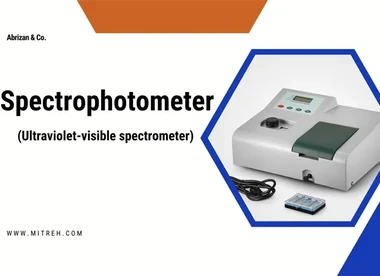
UV-Vis or ultraviolet-visible spectrometer (spectrophotometer)
A spectrophotometer, or visible and ultraviolet spectrometer, sometimes called UV, is a device for measuring the amount of a substance based on the amount of electromagnetic absorption of that substance.

FTIR Infrared Spectrometer
Fourier transform infrared (FTIR) spectroscopy is a method that scientists use to determine the structure of molecules by absorbing characteristic infrared radiation. The infrared spectrum is the vibrational spectrum of a molecule. When exposed to infrared radiation, sample molecules selectively absorb radiation of specific wavelengths, which causes a change in the dipole moment of the sample molecules.
Autolab device
The Autolab is an ideal choice for those looking for a low-cost, compact, yet high-performance electrochemical analyzer. Fully integrated with NOVA software, this compact instrument can perform resistance measurements in the microhertz to megahertz frequency range.

High-performance liquid chromatography (HPLC)
HPLC analysis, or high-performance liquid chromatography, is suitable for analyzing and separating chemical and plant compounds and is used in various fields of chemistry, pharmacy, industrial chemistry, and clinical diagnostics.

pH measurement and its methods
The pH of water determines the concentration of hydrogen ions and its acidity or alkalinity. Pure water dissociates to a very small extent into H and OH ions. The pH of drinking water should usually be around 7 (neutral). If the pH is less than 7, the water is acidic, and if the pH is above 7, the water is alkaline.

Danger rhombus
The National Fire Protection Association (NFPA) has developed a standard called NFPA 704 that is used to identify hazards from materials (especially chemicals). Among occupational health and safety experts, this standard has become known as the Hazard Diamond. It seems that the Rescue Diamond might have been a more appropriate name for the Hazard Diamond!
Submit your opinion
Your email address will not be published.