


Gas chromatography/mass spectrometry (GC/MS)

Gas chromatography/mass spectrometry (GC/MS) separates chemical mixtures (gas phase) and identifies components at the molecular level (mass phase). It is one of the most accurate tools for analyzing environmental samples. Gas chromatography works on the principle that a mixture is separated into its constituent components when heated. The heated gases are passed through a column filled with an inert gas (such as helium). When the separated materials exit the column, they flow into a mass spectrometer. Mass spectrometry identifies compounds by the mass of the analyte molecule. Mass spectrometry is considered the only definitive analytical detector.
Application of Gas Chromatography/Mass Spectrometry
GC/MS is a method that can be used to separate volatile organic compounds and pesticides. Portable GC units can be used to identify airborne contaminants and are currently being used to investigate vapor permeation. However, other applications of GC/MS, along with other separation and analytical methods, have been developed for radionuclides, explosive compounds such as RDX and TNT, and metals.
Gas Chromatography/Mass Spectrometry Applications
Pharmaceutical
GC-MS is used in screening tests to diagnose several inborn errors of metabolism. It detects trace levels of compounds in the urine of patients with genetic metabolic disorders. It can also detect the presence of oils in ointments, creams, and lotions.

Environmental Monitoring
Monitoring environmental contaminants is one of the main applications of GC-MS. It is widely used in the detection of dibenzofurans, dioxins, herbicides, sulfur, pesticides, phenols and chlorophenols in air, soil and water.
Food and Aromatic Compound Analysis
Aromatic compounds such as fatty acids, esters, aldehydes, alcohols and terpenes present in food and beverages can be easily analyzed using GC-MS. This method can also be used to detect food spoilage or contamination. Analysis of a wide range of oils such as lavender oil, olive oil, peppermint oil and essential oils, perfumes, fragrances, allergens, menthol and syrups is also possible using GC-MS.
Forensic Science
Fire residue analysis can be performed using GC-MS in accordance with the standards of the American Society for Testing and Materials (ASTM). GC-MS is widely used in forensic toxicology to identify toxins and steroids in biological samples and in anti-doping laboratories to detect performance-enhancing drugs such as anabolic steroids.
Biological analysis
GC-MS can be used to analyze body fluids to identify narcotics, barbiturates, alcohols, and drugs such as anticonvulsants, anesthetics, antihistamines, hypnotics, and antiepileptic drugs. It is also useful in the detection of contaminants and metabolites in serum and in the characterization of fatty acids in microbes.
Industrial applications
GC-MS is ideal for the analysis of inorganic gases and aromatic solvents, the detection of impurities and allergens in cosmetics. It is also used in the synthesis of cellulose acetate, polyethylene, polyvinyl, and synthetic fibers.

# Specialized Gas Chromatography/Mass Spectrometry (GC/MS) Analysis by Abrizan Company
share :
Related Articles
Flame Photometer
Flame photometry is used to determine the concentration of alkaline earth and alkaline elements (in inorganic chemical analysis to determine the concentration of certain metal ions including sodium, potassium, lithium, and calcium) in aqueous solutions.
UV-Vis or ultraviolet-visible spectrometer (spectrophotometer)
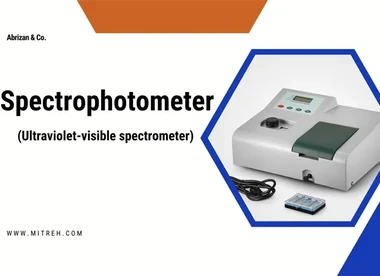
A spectrophotometer, or visible and ultraviolet spectrometer, sometimes called UV, is a device for measuring the amount of a substance based on the amount of electromagnetic absorption of that substance.

FTIR Infrared Spectrometer
Fourier transform infrared (FTIR) spectroscopy is a method that scientists use to determine the structure of molecules by absorbing characteristic infrared radiation. The infrared spectrum is the vibrational spectrum of a molecule. When exposed to infrared radiation, sample molecules selectively absorb radiation of specific wavelengths, which causes a change in the dipole moment of the sample molecules.

Autolab device
The Autolab is an ideal choice for those looking for a low-cost, compact, yet high-performance electrochemical analyzer. Fully integrated with NOVA software, this compact instrument can perform resistance measurements in the microhertz to megahertz frequency range.

High-performance liquid chromatography (HPLC)
HPLC analysis, or high-performance liquid chromatography, is suitable for analyzing and separating chemical and plant compounds and is used in various fields of chemistry, pharmacy, industrial chemistry, and clinical diagnostics.

Glass membranes
A silicate glass used for glass membranes consists of an infinite three-dimensional structure of four negatively charged SiO4 groups, in which each silicon is bonded to four oxygens and each oxygen to two silicons. Within the network of this structure there are enough cations to neutralize the negative charge of the silicate group. Singly charged cations such as sodium and lithium move in the network and are responsible for electrical conduction within the membrane.

pH measurement and its methods
The pH of water determines the concentration of hydrogen ions and its acidity or alkalinity. Pure water dissociates to a very small extent into H and OH ions. The pH of drinking water should usually be around 7 (neutral). If the pH is less than 7, the water is acidic, and if the pH is above 7, the water is alkaline.

Danger rhombus
The National Fire Protection Association (NFPA) has developed a standard called NFPA 704 that is used to identify hazards from materials (especially chemicals). Among occupational health and safety experts, this standard has become known as the Hazard Diamond. It seems that the Rescue Diamond might have been a more appropriate name for the Hazard Diamond!
Submit your opinion
Your email address will not be published.