


Autolab device

Autolab
The Autolab is an ideal choice for those looking for a low-cost, compact, yet high-performance electrochemical analyzer. Fully integrated with NOVA software, this compact instrument can perform resistance measurements in the microhertz to megahertz frequency range.
Autolab Electrochemical Characterization Methods
Linear Shift Voltammetry (LSV)
In the Autolab, linear shift voltammetry or LSV analysis is one of the most common methods for characterizing corrosion phenomena. It involves shifting the working electrode potential and measuring the current response. Using LSV, valuable information can be obtained regarding corrosion mechanisms, corrosion rates, and the susceptibility of specific materials to corrosion in various environments.
Electrochemical Impedance Spectroscopy (EIS)
In recent years, electrochemical impedance spectroscopy (EIS) analysis has been successfully applied to corrosion systems in the Autolab. One of the advantages of EIS over DC is the possibility of using very small amplitude signals without disturbing the measurement of properties.
Electrochemical impedance spectroscopy (EIS) is a powerful method for characterizing electrochemical systems. It has a wide range of applications in the field of material characterization. It is commonly used in the characterization of coatings, batteries, fuel cells, and corrosion phenomena. It has also been used as a tool to investigate mechanisms in electrodeposition, electrolysis, the study of passivation and corrosion, diffusion of ions in membranes, the study of semiconductor interfaces, and biosensors.
Electrochemical noise (ECN)
During localized corrosion, electrochemical noise is generated by a combination of random (unintentional) processes, such as breakdown of passivation films and resorption. ECN involves current and/or potential measurements and data analysis using the Fast Fourier Transform (FFT).

share :
Related Articles
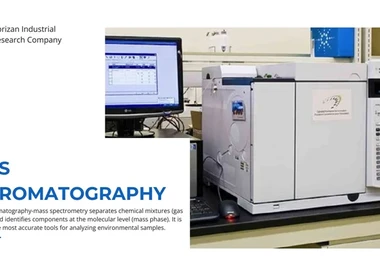
Gas chromatography/mass spectrometry (GC/MS)
Gas chromatography-mass spectrometry separates chemical mixtures (gas phase) and identifies components at the molecular level (mass phase). It is one of the most accurate tools for analyzing environmental samples.
Flame Photometer
Flame photometry is used to determine the concentration of alkaline earth and alkaline elements (in inorganic chemical analysis to determine the concentration of certain metal ions including sodium, potassium, lithium, and calcium) in aqueous solutions.
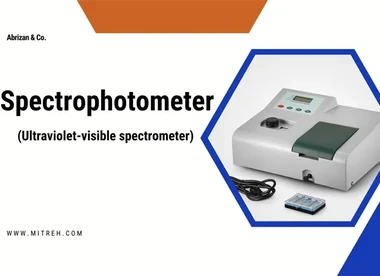
UV-Vis or ultraviolet-visible spectrometer (spectrophotometer)
A spectrophotometer, or visible and ultraviolet spectrometer, sometimes called UV, is a device for measuring the amount of a substance based on the amount of electromagnetic absorption of that substance.

FTIR Infrared Spectrometer
Fourier transform infrared (FTIR) spectroscopy is a method that scientists use to determine the structure of molecules by absorbing characteristic infrared radiation. The infrared spectrum is the vibrational spectrum of a molecule. When exposed to infrared radiation, sample molecules selectively absorb radiation of specific wavelengths, which causes a change in the dipole moment of the sample molecules.

High-performance liquid chromatography (HPLC)
HPLC analysis, or high-performance liquid chromatography, is suitable for analyzing and separating chemical and plant compounds and is used in various fields of chemistry, pharmacy, industrial chemistry, and clinical diagnostics.

Glass membranes
A silicate glass used for glass membranes consists of an infinite three-dimensional structure of four negatively charged SiO4 groups, in which each silicon is bonded to four oxygens and each oxygen to two silicons. Within the network of this structure there are enough cations to neutralize the negative charge of the silicate group. Singly charged cations such as sodium and lithium move in the network and are responsible for electrical conduction within the membrane.

pH measurement and its methods
The pH of water determines the concentration of hydrogen ions and its acidity or alkalinity. Pure water dissociates to a very small extent into H and OH ions. The pH of drinking water should usually be around 7 (neutral). If the pH is less than 7, the water is acidic, and if the pH is above 7, the water is alkaline.

Danger rhombus
The National Fire Protection Association (NFPA) has developed a standard called NFPA 704 that is used to identify hazards from materials (especially chemicals). Among occupational health and safety experts, this standard has become known as the Hazard Diamond. It seems that the Rescue Diamond might have been a more appropriate name for the Hazard Diamond!
Submit your opinion
Your email address will not be published.